
Haz clic aquí para ver la versión en español.
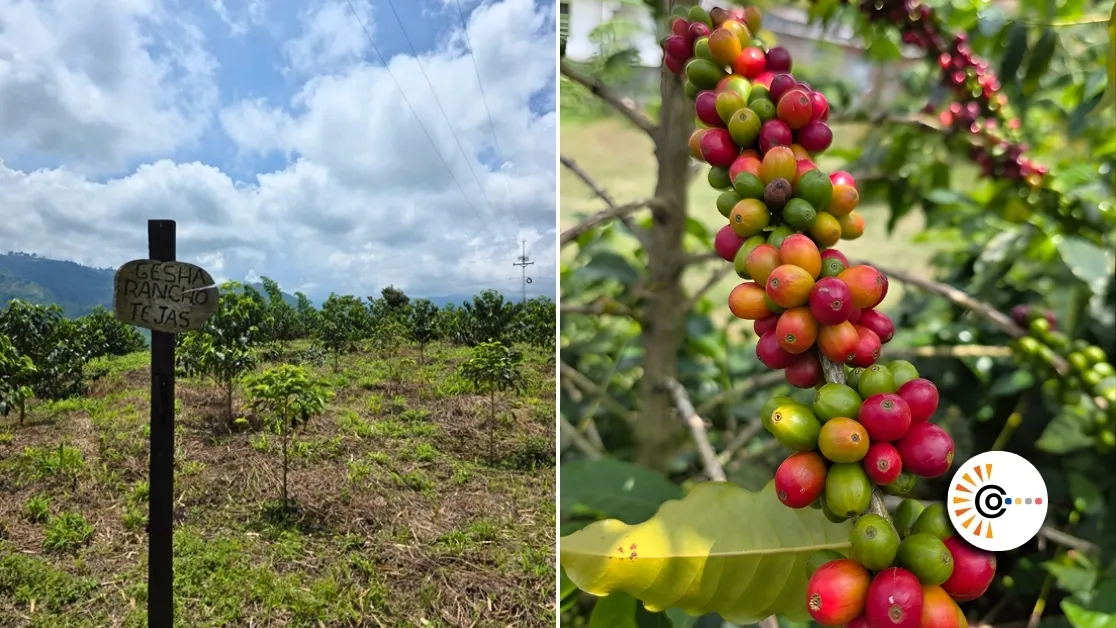
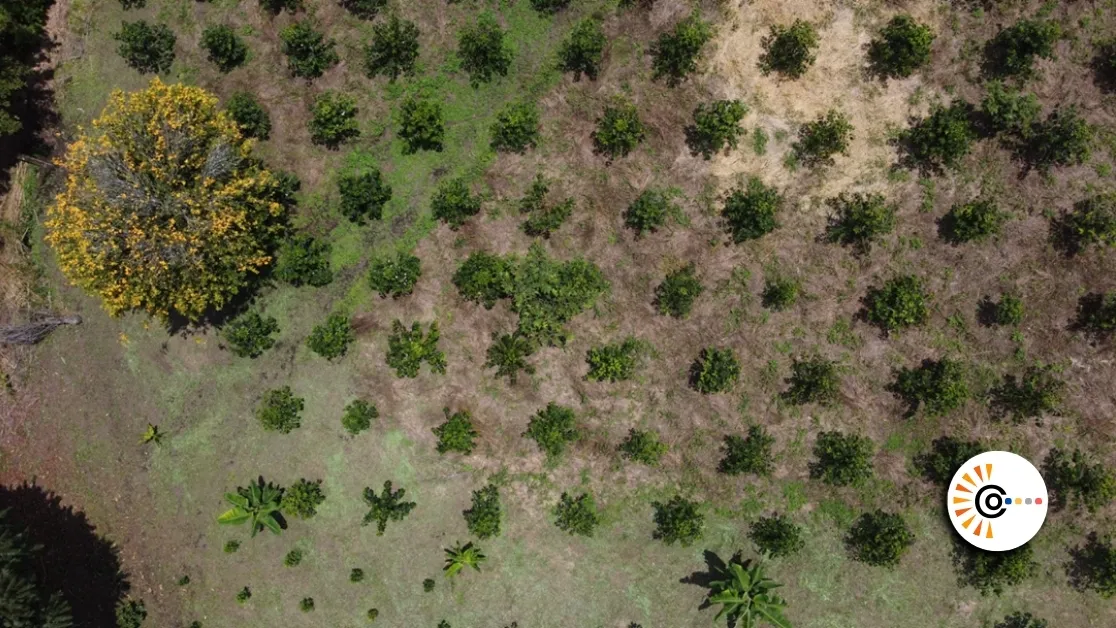
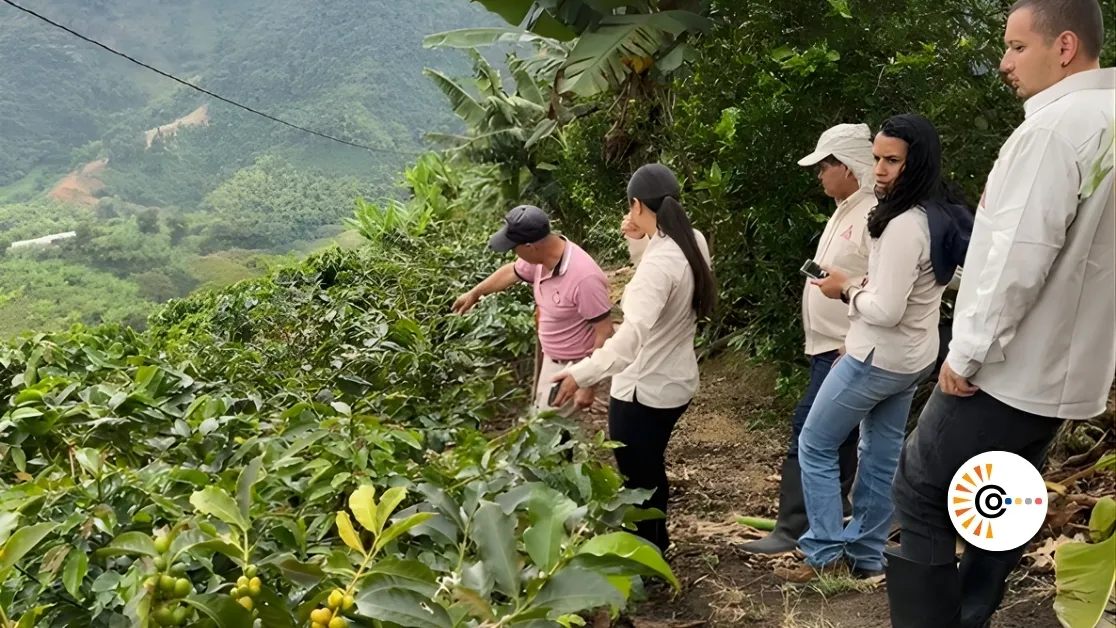
Researchers from the research center conducted reconnaissance days in the rural area of Manizales to contrast satellite data with agronomic reality, confirming that changes in foliage respond to the crop's natural cycles.
Manizales, December 17, 2025, a Cenicafé technical team, made up of Juan Rodrigo Sanz Uribe, Eduardo Duque Dussán, Laura Vanesa Cano Rodríguez, and Valentina Cruz Ospina, carried out a series of field validations to strengthen the environmental traceability of coffee against the requirements of the European Union Regulation (EUDR).
The work focused on differentiating the physiological phases of coffee from deforestation processes, using precision technology that, in the future, will allow ensuring that the bean complies with international sustainability standards.
The science behind the greenery of the coffee plantation
The technical report underlines that coffee in Colombia follows a sigmoidal growth curve. Upon reaching the senescence phase (approximately five years of age), the crop undergoes natural changes in its leaf density. This detail is critical to prevent satellite monitoring systems from misinterpreting a renovation as a loss of forest.
To verify this dynamic, the team used remote sensing and reflectance analysis tools in different batches in the region:
- Validation of adult crops: In 8-year-old lots, a slight decrease in the vegetation index (NDVI) of -0.032 was identified. The researchers confirmed on the ground that this is not due to deforestation but to the technical need for renovation to maintain the crop's health.
- Monitoring of young batches: In areas of recent establishment (2 years), high values of luminosity and reflectance were recorded in the green channel, which indicates active vegetation and healthy growth.
Evidence of operational sustainability
After comparing historical data from 2020 with 2024, the study concluded that biomass in the areas assessed remains stable or is growing. These results provide technical evidence that the coffee produced in these areas does not come from deforested areas after the cut-off date set by European regulations (31 December 2020).
Data Capture Challenges
The report identifies an important limitation for the analysis of 2025: persistent cloud cover in the Manizales area has made it difficult to obtain clear satellite imagery from the Copernicus (Sentinel-2) program. Given this, specialists recommend acquiring cloud-free images to maintain accuracy in assessing the current state of the soil.
With this type of intervention, solid technical support is generated that protects local coffee's access to global markets, basing sustainability on measurable, verified data directly at the origin.
Stay tuned for updates and insights from the COMUNIDAD project. Follow us on social media for the latest developments and outcomes!
Click here to view the English version.
Cenicafé valida en terreno el historial de biomasa para certificar café libre de deforestación
Investigadores del centro de investigación realizaron jornadas de reconocimiento en la zona rural de Manizales para contrastar datos satelitales con la realidad agronómica, confirmando que los cambios en el follaje responden a ciclos naturales del cultivo.
Manizales, 17 de diciembre de 2025, un equipo técnico de Cenicafé, conformado por Juan Rodrigo Sanz Uribe, Eduardo Duque Dussán, Laura Vanesa Cano Rodríguez y Valentina Cruz Ospina, llevó a cabo una serie de validaciones en campo para fortalecer la trazabilidad ambiental del café ante las exigencias del Reglamento de la Unión Europea (EUDR).
El trabajo se centró en diferenciar las fases fisiológicas del café de los procesos de deforestación, utilizando tecnología de precisión que permita, a futuro, asegurar que el grano cumpla con los estándares internacionales de sostenibilidad.
La ciencia detrás del verdor del cafetal
El informe técnico subraya que el café en Colombia sigue una curva de crecimiento sigmoidal. Al alcanzar la fase de senescencia (aproximadamente a los cinco años de edad), el cultivo experimenta cambios naturales en su densidad foliar. Este detalle es crítico para evitar que los sistemas de monitoreo satelital interpreten erróneamente una renovación como una pérdida de bosque.
Para verificar esta dinámica, el equipo utilizó herramientas de teledetección y análisis de reflectancia en diferentes lotes de la región:
- Validación de cultivos adultos: En lotes de 8 años de edad, se identificó una leve disminución del índice de vegetación (NDVI) de -0.032. Los investigadores confirmaron en el terreno que esto no se debe a la deforestación, sino a la necesidad técnica de renovación para mantener la sanidad del cultivo.
- Monitoreo de lotes jóvenes: En áreas de reciente establecimiento (2 años), se registraron altos valores de luminosidad y reflectancia en el canal verde, lo que indica una vegetación activa y un crecimiento saludable.
Evidencia de sostenibilidad operativa
Tras comparar los datos históricos de 2020 con los de 2024, el estudio concluyó que la biomasa en las áreas evaluadas se mantiene estable o en crecimiento. Estos resultados aportan pruebas técnicas de que el café producido en estas zonas no proviene de áreas deforestadas posteriores a la fecha de corte establecida por la normativa europea (31 de diciembre de 2020).
Desafíos en la captura de datos
El reporte identifica una limitación importante para el análisis del año 2025: la persistente nubosidad en la zona de Manizales ha dificultado la obtención de imágenes satelitales claras del programa Copernicus (Sentinel-2). Ante esto, los especialistas recomiendan la adquisición planificada de imágenes libres de nubes para mantener la precisión en las evaluaciones del estado actual del suelo.
Con este tipo de intervenciones, se genera un soporte técnico sólido que protege el acceso del café local a los mercados globales, basando la sostenibilidad en datos medibles y verificados directamente en el origen.
¡Mantente al tanto de las novedades y perspectivas del proyecto COMUNIDAD! Síguenos en redes sociales para conocer los últimos avances y resultados.

Existing Comments